
AI and Work
How AI Is Changing Work
AI is changing work primarily by reducing the time required for research, drafting, documentation, planning, and coordination.
The near-term effect is less about entire professions disappearing and more about changing workflows, expectations, team structures, and the skills that create value. This guide separates what is already happening from the changes that will take years to unfold.
Start with what is changingA practical starting point
Who this future-of-work guide is for
- Professionals thinking about how AI will change their careers.
- Leaders responsible for adopting AI inside an organization.
- People separating durable changes from short-term hype.
- Anyone deciding which skills will become more valuable.
AI Is Already Changing Work
AI is changing work long before it replaces entire jobs. It removes friction from research, drafting, documentation, planning, communication, and coordination.
That changes the pace of work, what organizations expect from individuals, and how much a small team can accomplish. The transition is already underway, but it will unfold unevenly over years.

AI Is a Long Transition, Not a Sudden Revolution
AI is not an overnight disruption, it is a decade long shift. Roles are widening, teams are compressing, and expectations are rising faster than organizations can adapt, creating both leverage and pressure for individuals.
The Real Impact of AI on Work Hours
The most immediate effect of AI is reducing wasted time, not replacing people. By removing friction like rework, coordination overhead, and unclear communication, AI quietly reshapes how long work takes.

AI isn’t wiping out white-collar work—it’s compressing it
AI isn’t eliminating professions, but it is removing slow, repetitive parts of knowledge work. The result is smaller teams, higher expectations, and more output per person.
AI changes how work gets done before it changes the organizational chart.
Will AI eliminate white-collar jobs?
Not in the way most people imagine. The first thing AI changes isn’t employment—it changes how work gets done. Writing, research, planning, documentation, coding, and communication all become dramatically faster. When those activities require fewer hours, organizations naturally begin reorganizing around that new level of productivity. That doesn’t mean every profession disappears. It means fewer people may be able to accomplish the same amount of work, expectations increase, and roles evolve. Some organizations will reduce hiring. Others will grow because they can deliver more with the same team. The transition is gradual, but it’s already underway.
Will AI reduce working hours?
It can, but history suggests productivity gains are often reinvested into producing more output rather than reducing hours. The important change isn’t the clock—it’s the amount of value a person can create during that time. Organizations decide whether those gains become growth, lower costs, or more personal flexibility.
How Organizations Are Responding
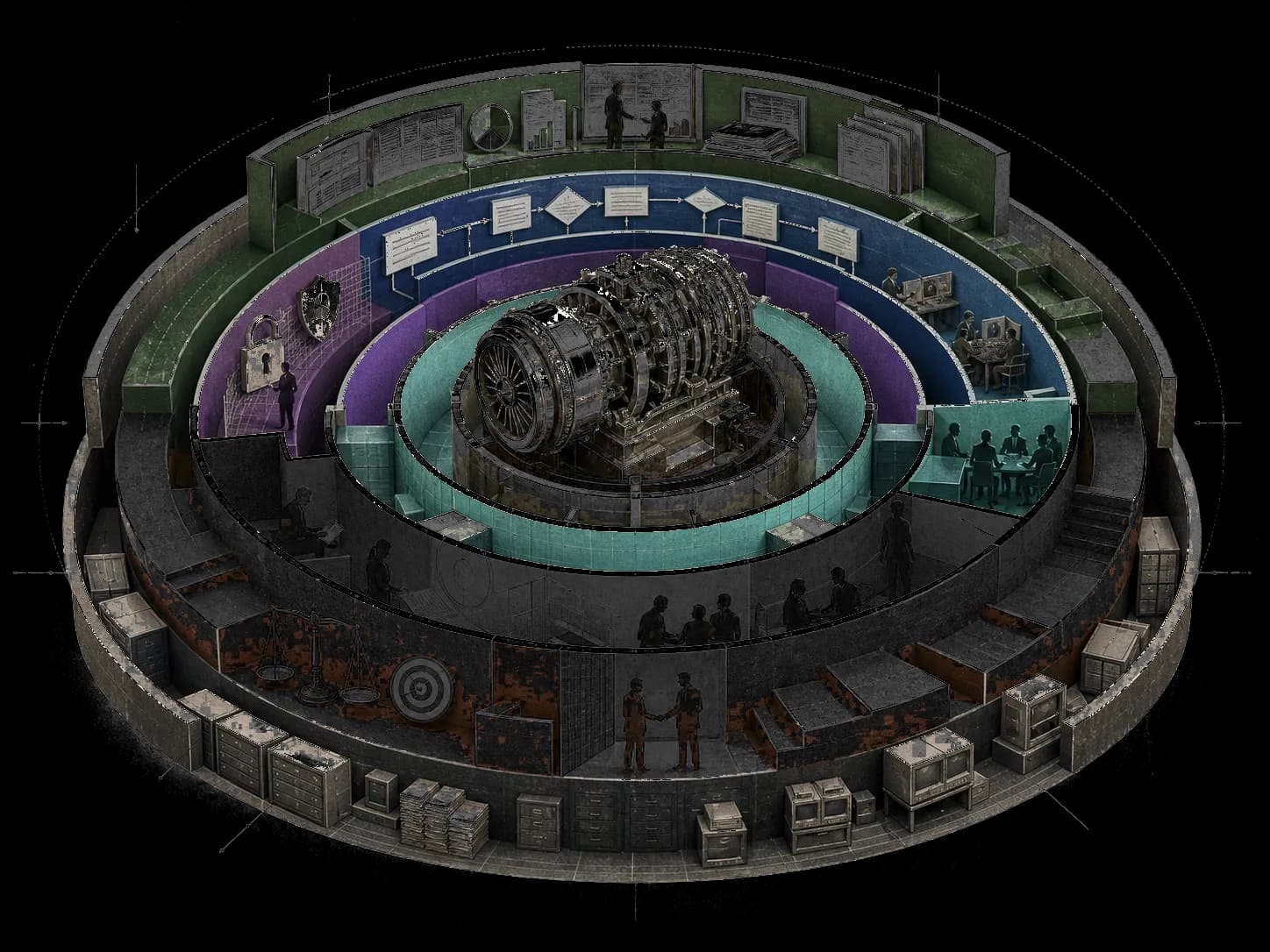
Organizations adopt AI more slowly than individuals because meaningful adoption requires governance, security, process redesign, training, and coordinated change.
The technology can improve every week while the surrounding company still moves on annual budgets, legacy systems, established incentives, and existing operating models.

AI Reveals the Cost of Poor Documentation
AI makes undocumented organizational knowledge visible. Giving it useful context requires clear goals, history, standards, terminology, examples, and constraints, the same documentation that makes work easier to teach, transfer, maintain, and improve.

AI Governance as the Key to Scalable Deployment
AI capability alone is not enough. Organizations that manage governance, risk, and compliance effectively can deploy faster and scale safely, because auditability and monitoring are what enable reliable and secure AI operations.

Personalization as a Governance Challenge
AI driven personalization boosts revenue but creates tension around transparency and ethics. As inference grows more opaque, leaders must balance relevance with governance. Companies that resolve this early will outperform those that do not.
Technology evolves every week. Organizations evolve over years.
Why aren’t companies adopting AI faster?
Individuals can begin using AI today. Organizations cannot. Large companies must coordinate governance, security, compliance, budgets, procurement, training, legacy systems, and organizational change. AI adoption therefore follows a maturity curve rather than a single rollout. Most organizations today are somewhere between experimentation and standardization, building the foundations required before AI can scale across the business.
What is AI maturity?
AI maturity is less about how many AI tools a company has and more about how consistently AI is integrated into everyday work. Early organizations experiment with isolated use cases. Mature organizations standardize processes, connect AI to business systems, establish governance, and build repeatable ways of working that continue improving over time.
What Becomes More Valuable
As AI makes execution cheaper, value shifts toward choosing the right problems, coordinating people and systems, designing better processes, and applying judgment.
The scarce resource is no longer always the ability to produce a first draft. It is increasingly the ability to decide what should happen, create the conditions for it, and learn from the result.

Start AI Automation With One Point of Friction
Useful AI adoption can start with a recurring, rule-based task whose results are easy to verify. Automating one point of friction can make people more capable while creating a practical path to the next improvement.

AI Redesigns Marketing Work Through Task Automation
AI shifts marketing from saving time to creating more value by enabling more experimentation, customer understanding, competitive analysis, and effective execution. It automates tasks, not roles, requiring work itself to be redesigned.

AI Expands the Scope of Modern Marketing Work
AI shifts marketing beyond faster execution by making previously impractical work, such as continuous research and customer analysis, economically feasible. As routine tasks are automated, teams can focus on higher-value capabilities that were previously out of reach.
AI lowers the cost of execution. Humans decide what should happen next.
What skills become more valuable as AI improves?
As execution becomes easier, value shifts toward defining problems, coordinating people, prioritizing work, making tradeoffs, and exercising judgment. AI can generate drafts, code, and analysis, but deciding what matters and why remains the responsibility of people. The professionals who learn fastest and orchestrate AI effectively will consistently outperform those who simply use the newest tools.
How can I build useful AI experience at work?
Start with a real, bounded task where the consequences of mistakes are manageable. Use tools approved by your organization, protect sensitive information, and compare the AI-assisted result with the existing way of working. Practice providing context, evaluating output, and documenting what improved or became more difficult.
The goal is not to use AI for every task. It is to develop judgment about where it helps, where it introduces risk, and how the surrounding workflow must change for the result to be useful.



Where This Is Heading
The larger shift will come from connecting AI to organizational knowledge, business processes, authority, and human judgment—not from using isolated chat tools.
The organizations that benefit most will build the context and coordination that allow people and AI systems to work together reliably.

Human Judgment Remains the Hardest Skill to Automate
AI excels at generating and synthesizing information, but experience highlights that professional expertise is rooted in judgment, nuance, and recognizing subtle issues before they become problems, making those capabilities far harder to automate.

AI Amplifies Human Capability Rather Than Replacing It
Daily experience with AI suggests its greatest impact is amplifying human capability, enabling people to become more productive, expand their skills, and solve larger problems rather than replacing their roles.

Organizational Knowledge May Matter More Than Smarter AI
AI models have advanced rapidly, but the greater opportunity may come from connecting them to decades of organizational knowledge. Making documented decisions, lessons, and processes searchable could have a bigger impact than further increases in model intelligence.
The future belongs to organizations that combine AI with human judgment rather than treating them as competitors.
Will AI replace experts?
Expertise increasingly shifts away from memorizing information and toward applying judgment. Experienced professionals recognize incomplete requirements, ask better questions, resolve conflicting priorities, and understand organizational context. AI amplifies those capabilities, but it doesn’t replace the experience required to apply them well.
Evidence base
Evidence about AI and work
Stanford Institute for Human-Centered AI · 2026
2026 AI Index Report: Economy
Data on organizational adoption, productivity, investment, and labor-market effects.
International Labour Organization · 2025
Generative AI and Jobs: A Refined Global Index
Task-level research on occupational exposure and why transformation is more likely than wholesale replacement.
Anthropic · 2026
Anthropic Economic Index: Economic Primitives
Observed AI usage, task success, time savings, skill effects, and productivity constraints.
Stanford Institute for Human-Centered AI · 2026
2026 AI Index Report: Responsible AI
Evidence on governance adoption and the organizational barriers that remain.
Acemoglu, Autor, Hazell, and Restrepo · 2022
Artificial Intelligence and Jobs: Evidence from Online Vacancies
Economic evidence that AI exposure changes task composition, skill demand, and hiring within affected establishments.
OECD · 2024
Who Will Be the Workers Most Affected by AI?
Analysis of why exposure is concentrated in many cognitive, tertiary-educated, white-collar occupations.
Noy and Zhang · 2023
Experimental Evidence on the Productivity Effects of Generative Artificial Intelligence
A randomized experiment finding faster completion and higher average quality on selected professional writing tasks.
Brynjolfsson, Li, and Raymond · 2023
Generative AI at Work
A field study finding average productivity gains in customer support, with larger gains among less-experienced workers.
Cui and coauthors · 2025
The Effects of Generative AI on High-Skilled Work
Pooled field experiments finding more completed tasks with coding assistance, with results varying by experience.
METR · 2025
Measuring the Impact of AI on Experienced Developer Productivity
A randomized study in which experienced open-source developers were slower with the tested tools in familiar repositories.
Brynjolfsson, Rock, and Syverson · 2021
The Productivity J-Curve
Research on why complementary investments in processes, business models, and human capital delay realized productivity gains.
Uren and coauthors · 2023
Technology Readiness and the Organizational Journey Towards AI Adoption
Research arguing that people, process, and data readiness matter alongside technology readiness.
NIST · 2024
Artificial Intelligence Risk Management Framework: Generative AI Profile
A cross-sector framework for governing, mapping, measuring, and managing risks from generative AI.
Continue exploring
See where workflows become agents
Explore how AI moves from assisting with individual tasks to pursuing goals across tools, information, and multi-step workflows.
Explore AI Agents